If SMS messages sent from a GoHighLevel account are being delayed, filtered, or blocked outright, an incomplete A2P 10DLC registration is almost always the reason. Carriers in the United States require any business sending application-to-person text messages to register their brand and messaging campaign, and getting this wrong quietly kills deliverability without any obvious error message the messages simply show as sent while customers never receive them.
What A2P 10DLC Actually Is
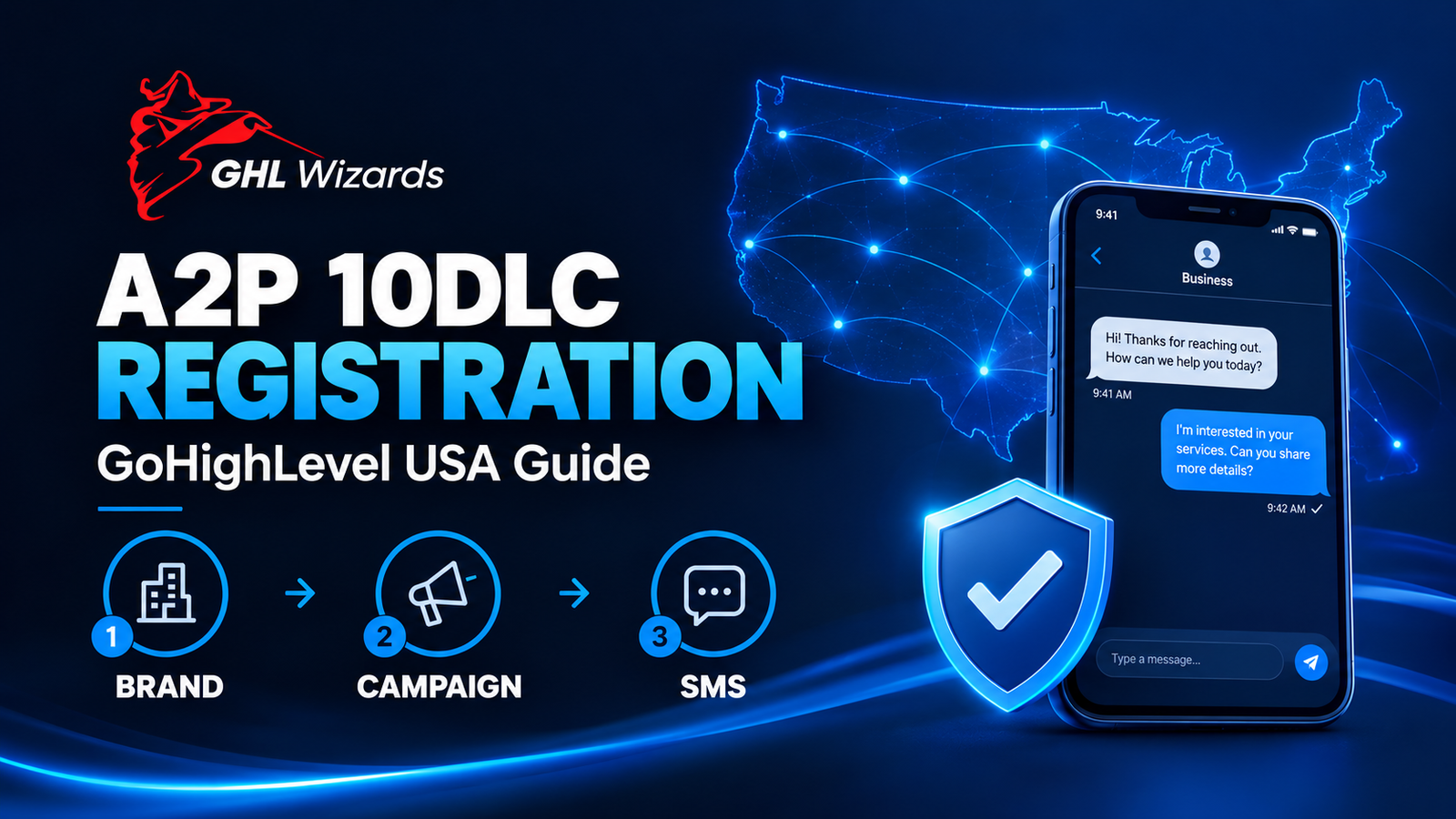
A2P 10DLC stands for Application-to-Person messaging over 10-Digit Long Codes. It is a framework created by US carriers to reduce spam and verify that businesses texting customers at scale are legitimate. Registration happens in two layers: brand registration, which verifies the business itself, and campaign registration, which describes what the messages are used for.
This system replaced an older, largely unregulated approach to business texting, and carriers now actively score both the brand and the campaign. A well-registered, clearly described business is treated very differently in terms of speed and volume than an unregistered or vaguely described one.
Why Unregistered Numbers Get Throttled or Blocked
Carriers apply low default throughput and aggressive filtering to unregistered traffic. In practice this means missed-call text-backs arrive minutes late, appointment reminders silently fail, and nurture sequences show as “delivered” in GoHighLevel while the customer never actually receives them. Registration removes these default penalties and unlocks far higher sending limits.
The gap between registered and unregistered throughput is often dramatic unregistered numbers can be capped at a handful of messages per minute, which is simply not viable for a business running automated reminders, follow-ups and marketing campaigns at any real scale.
Choosing the Right Campaign Type
Carriers score campaigns differently depending on their declared use case customer care, marketing, mixed, low-volume mixed, and so on. Picking the wrong category, or writing a vague campaign description, is one of the most common reasons registrations get rejected or approved with unnecessarily low throughput. The description should match, word for word in spirit, what the business is actually sending.
A business that sends both appointment reminders and promotional offers, for example, usually needs a mixed-use campaign rather than a narrowly scoped customer-care campaign registering under the wrong category can lead to a technically approved campaign that still gets filtered once real-world message content does not match what was declared.
Common Mistakes That Delay Approval
Mismatched business details between the brand registration and official business records, a website that does not clearly describe the business, missing opt-in language on forms, and vague sample messages are the most frequent causes of delay or rejection. We review every field before submission specifically to avoid a second round-trip through carrier review, which can add days or weeks.
Sample message quality is underrated as a factor. Carriers evaluate the example messages submitted with a campaign, and generic placeholder text rather than realistic examples of what will actually be sent is a common, avoidable reason approvals stall.
What to Do if Deliverability Problems Persist After Registration
Occasionally, a properly registered number still experiences deliverability issues, usually due to a low trust score building back up after past unregistered sending, or a number that was previously flagged before registration was completed. In these cases, we work through carrier-specific troubleshooting and, when necessary, help migrate messaging to a fresh, properly registered number rather than continuing to fight an already-damaged sender reputation.
Frequently Asked Questions
How long does A2P 10DLC registration typically take?
Brand registration is often near-instant to a few days, while campaign approval can take anywhere from same-day to a couple of weeks depending on carrier review queues and how completely the application was filled out.
Is A2P 10DLC registration a one-time task?
Largely yes for the brand and campaign registration itself, though message content and volume should stay consistent with what was registered to avoid trust-score issues developing over time.
Does this apply to businesses outside the USA?
A2P 10DLC is specific to US carrier networks; businesses texting primarily outside the US are subject to different regional requirements, which we can advise on separately.
Conclusion
A2P 10DLC registration is invisible when it is done right and expensive when it is ignored most GoHighLevel deliverability complaints trace back to this single, fixable step.
Call to Action
GHL Wizards handles A2P 10DLC brand and campaign registration for GoHighLevel accounts end to end, so text messages actually reach customers instead of quietly disappearing into carrier filters.